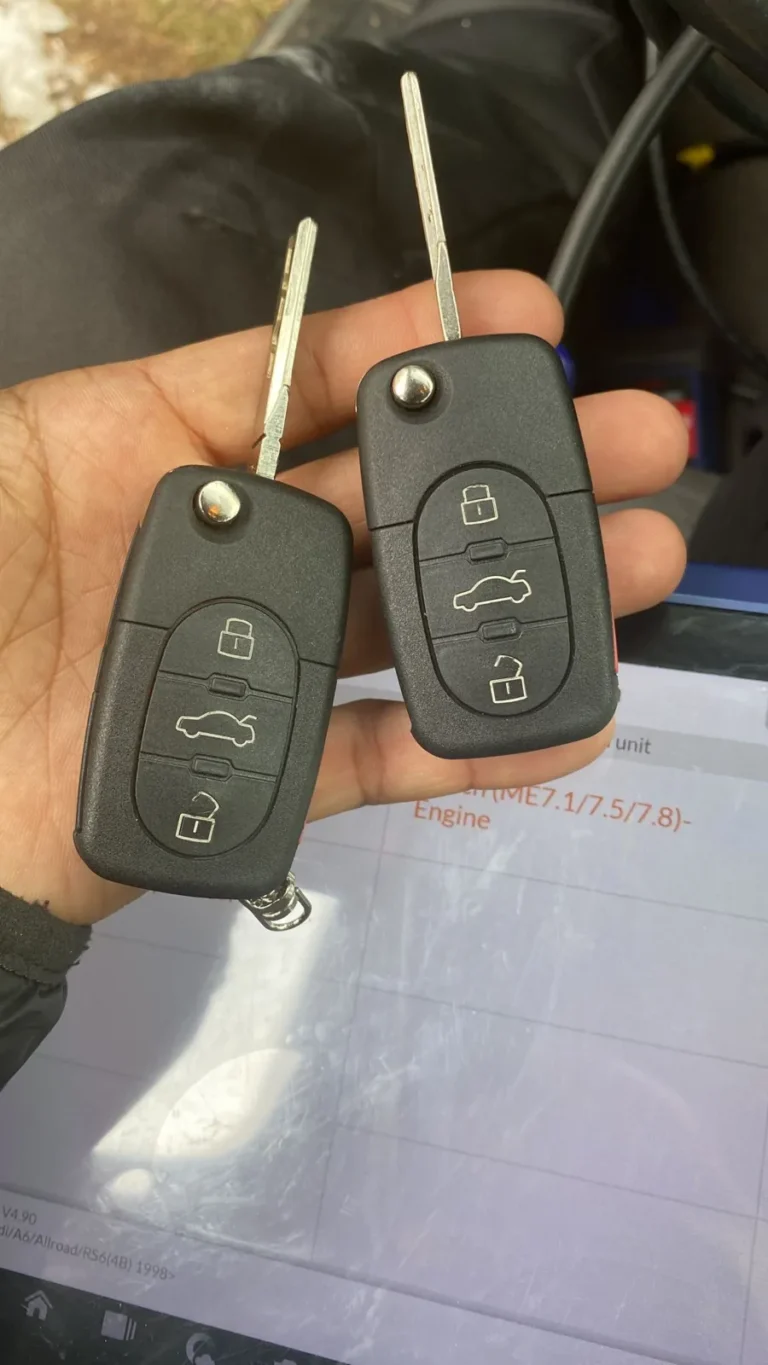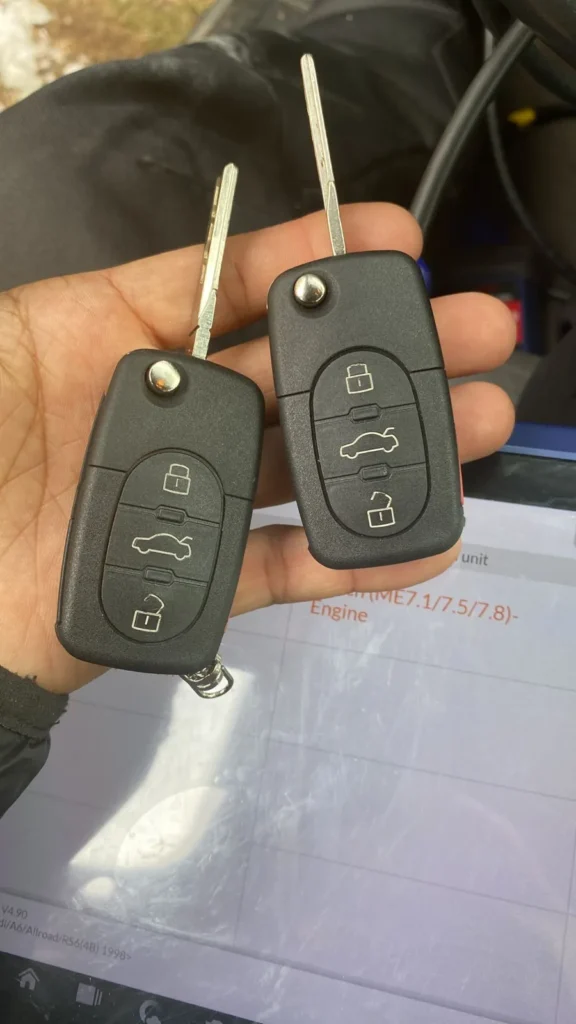
Replacing a transponder key is a two-part job. First, a new key blank must be cut to match your car’s original key code. Second, the embedded chip must be programmed to your vehicle’s immobilizer so the car will actually start. Skip either step and you have a key that fits the lock but won’t fire the engine.
A transponder chip key contains a small electronic chip that communicates with your vehicle’s immobilizer system every time you turn the ignition. If the signal doesn’t match, the car won’t start, full stop. That security feature is exactly why replacing one requires more than just cutting a new blade at a hardware store kiosk.
Three routes exist for getting a replacement: a certified mobile locksmith, a dealership, or DIY. Locksmith Knights Raleigh provides on-site cut-and-program services across Raleigh. This guide walks you through the documents you’ll need, how the process works step by step, realistic 2026 costs, and when each option makes the most sense.
Key takeaways
- Two jobs, not one: Blade cutting and chip programming are separate steps; both must be completed correctly for the key to work.
- Documents matter: Bring a government-issued photo ID, your vehicle registration or title, and your VIN before calling anyone.
- Locksmiths cost less: According to locksmithrates.com, automotive locksmiths save you roughly 30%–50% compared to dealership pricing in 2026.
- All-keys-lost raises the stakes: Losing every key increases both cost and time, and rules out most DIY options.
- Same-day is possible: A mobile locksmith is often the most reliable route for same-day service, while dealerships typically take one to three business days.
What you need to gather before making the call
Before you contact any provider, pulling together the right information will save you time and prevent being turned away. Every locksmith and dealership will ask for your vehicle’s year, make, model, and trim level, along with the Vehicle Identification Number. Your VIN appears on your registration, your insurance card, the dashboard on the driver’s side visible through the windshield, and the door-jamb label. Some providers may request the license plate number as an additional identifier.
Proof of ownership is non-negotiable. No legitimate provider cuts or programs a transponder chip key without confirming that the vehicle is yours. A valid government-issued photo ID paired with your current vehicle registration or title covers you in almost every situation. Some locksmiths also accept an insurance card or loan paperwork if the registration isn’t available. If the vehicle is leased, company-owned, or registered to someone else, bring written authorization from the legal owner or fleet manager.
One more detail worth confirming before you call: do you still have a working key? If you do, a duplicate can often be programmed using a standard learn procedure, which keeps both cost and time lower. If all keys are lost, the job becomes more complex. The locksmith must work without a reference key, often requiring security-code access or EEPROM-level programming. That complexity raises both the price and the time on-site. If your vehicle came with a key-code card or PIN in the owner’s packet, dig that out too; some providers can use it to streamline the process.
How to replace a transponder key: cutting and programming explained
Step 1: Cutting the blade
The blade cut comes first. The correct blank must match the specific blade profile, called the keyway, for your vehicle. Getting that wrong means the key won’t even turn the door lock, let alone the ignition. A locksmith either uses your existing key code on file or decodes a working key to cut a new blade, then mechanically tests it in the door and ignition before any electronic work begins. Laser-cut or sidewinder keys require specialized machinery, so not every shop has the equipment for every vehicle.
Step 2: Programming the chip
Once the blade checks out, programming begins. For most vehicles, this means connecting an OBD-II key programmer to the diagnostic port, usually located beneath the steering column, and running a vehicle-specific immobilizer enrollment procedure. The chip is energized by the ignition antenna, which initiates a challenge-response exchange. The vehicle sends a random signal, the chip calculates a cryptographic response, and the immobilizer compares it against the expected result. If accepted, the new key’s credentials are stored in the vehicle’s authorized-key list.
Some older vehicles support an onboard self-programming sequence using ignition-cycle steps, but this only works when you already have two working keys. Newer vehicles, all-keys-lost situations, and push-button smart key systems require a bidirectional diagnostic tool and sometimes manufacturer security credentials or a PIN. The process takes 15–60 minutes for a standard job; all-keys-lost scenarios can run 45–120 minutes depending on the vehicle’s immobilizer generation.
How the procedure varies by make
The procedure varies meaningfully by manufacturer. Ford’s older PATS-equipped models support a two-key ignition-cycle method, but anything with fewer than two working keys requires a programmer or dealer access.
Toyota and Honda systems vary by generation; some support owner programming sequences, but timing is strict and an incorrect attempt can leave the system unchanged or erase existing keys. Many GM models use a timed relearn with an existing key, while others require scan-tool access and may erase previously stored keys during programming. Always verify the exact procedure for the specific year and model before attempting anything.
Locksmith, dealership, or DIY: choosing the right route to replace a transponder key
For the majority of car key replacement situations, including all-keys-lost scenarios on common makes, a certified automotive locksmith is faster and costs 25%–50% less than a dealership, according to locksmithrates.com. Mobile locksmiths come to your location, which eliminates the need for a tow, a waiting room, and an appointment scheduled days out. Locksmith Knights Raleigh offers a guaranteed 20-minute local response and provides on-site cutting and programming services.
The dealership makes sense in a narrower set of situations: proprietary systems on some luxury or newer vehicles that require manufacturer-side security credentials, vehicles still under active warranty where dealer service protects that coverage, or cases where the locksmith’s equipment doesn’t support the specific immobilizer generation. In most of those situations, the dealer will still need the same VIN and ownership documents, and the wait time is typically one to three business days before programming even starts.
DIY is realistic only for older vehicles that support an ignition-switch programming sequence and where you already have two working keys. Beyond the correct blank, you need a compatible OBD-II key programmer, stable battery power, and key-cutting equipment if the blank isn’t pre-cut. For a one-time key fob replacement or transponder key replacement, that equipment outlay rarely beats a locksmith quote. DIY programming does not work for all-keys-lost situations, smart or proximity keys, vehicles requiring security codes, or EEPROM-level immobilizer work. If any of those apply to your situation, skip the DIY route entirely.
What transponder key replacement costs in 2026
Cost depends on the type of key, whether you have a working key, and which provider you choose.
Mobile and after-hours service fees from a locksmith typically add $25–$75 to the total, according to Automobiles Illustrated. Always request an itemized quote that breaks out the blank, cutting, programming, and any travel or emergency fees so you’re comparing costs on the same basis. Buying a blank online looks cheap upfront, but you’ll still need a separate appointment for cutting and programming; factor that added cost and time into the real total.
Several factors push the price higher regardless of provider. All-keys-lost situations add diagnostic time and sometimes EEPROM work. Luxury or late-model vehicles with proprietary immobilizer systems require more specialized tools and sometimes manufacturer credentials. Laser-cut or high-security blade profiles also require equipment that not every shop carries. After-hours emergency service carries a premium across the board, so calling during normal business hours saves money if the situation isn’t urgent.
How long does the whole replacement take?
Timeline varies dramatically depending on who you call. A mobile locksmith with the correct blank in stock typically arrives within 30–60 minutes and completes cutting and programming in another 15–45 minutes, putting total time from call to working key well under 90 minutes in most standard cases. At Locksmith Knights Raleigh, our guaranteed 20-minute response time means we’re often on-site faster. All-keys-lost situations or complex immobilizer systems can extend the total job to 1.5–2.5 hours, but the work still happens the same day.
A dealership usually takes one to three business days for an in-stock or routinely supplied key, and manufacturer special orders can take three to seven business days or longer before programming even begins. The programming itself takes a similar 15–45 minutes; the dealership’s longer timeline comes from scheduling, check-in queues, and waiting for the right key to arrive. Ordering a blank online and taking it to a locksmith or dealer for programming adds another two to seven business days of shipping time before you’re anywhere near the programming stage.
If you need your vehicle back today, a mobile locksmith is often the most reliable route for a same-day result. Newer proximity keys, luxury vehicles with hard-to-source blanks, missing ownership documents, or late-model push-button systems requiring manufacturer-side authorization can slow any provider down, but those delays hit dealerships far harder than a fully equipped mobile locksmith.
Why a missing transponder key is also a security problem
A missing transponder key doesn’t just leave you without a way to start the car. It means an unaccounted key to your vehicle exists somewhere, and someone may eventually try to use it. If the key was stolen rather than simply lost, that risk is immediate, especially for a vehicle parked regularly in a predictable location.
Some immobilizer systems allow key deletion, meaning the lost key can be wiped from the vehicle’s authorized-key list entirely. Only a locksmith or dealer with the right equipment can perform that deletion and reprogram only the keys currently in your possession. If your key was stolen, that step is worth asking about specifically when you call for a replacement.
When you’re ready to act, gather your VIN, photo ID, and registration first. Then contact a certified automotive locksmith for a quote; in most situations, they will be faster and cheaper than the dealership. For anyone in the Raleigh area, Locksmith Knights Raleigh handles transponder key replacement on-site with our guaranteed 20-minute response time, day or night.
Getting back on the road the right way
To replace a transponder key correctly, two jobs must be done right: cutting the blade to your vehicle’s exact specifications and programming the chip to your immobilizer. Both steps are required, and skipping or rushing either one leaves you with a key that doesn’t fully work.
For most drivers, a certified mobile locksmith offers the fastest turnaround and the lowest total cost compared to a dealership. The replace car key immobilizer process at a dealership makes sense for proprietary luxury systems or warranty situations, but those cases are the exception, not the rule. DIY programming is only viable for older vehicles with two working keys already in hand; for everything else, the cost of the equipment alone tips the math toward professional service.
Have your VIN, photo ID, and vehicle registration ready before you make the first call, regardless of which provider you choose. If you’re in the Raleigh area and need to replace a transponder key today, reach out to Locksmith Knights Raleigh. Locksmith Knights Raleigh provides mobile, on-site transponder key replacement across Raleigh.
Frequently Asked Questions
Will replacing a transponder key at a locksmith void my vehicle’s warranty?
Using a dealership for key replacement can protect an active warranty, so choose the dealer when warranty protection is important. We recommend the dealer route for vehicles still under active warranty because dealership service preserves that coverage; a locksmith may be faster and cheaper but won’t provide the same factory warranty protection.
Can we have a lost key deleted from the vehicle’s authorized list to prevent misuse?
Yes, a locksmith or dealership with the right equipment can delete a lost key from the vehicle’s authorized-key list. Ask about key deletion specifically when you call so they can include that step in the job and ensure only the keys you possess remain programmed.
Should we buy a blank key online before calling a locksmith or dealer to save money?
Buying a blank online may look cheaper upfront, but it still requires separate cutting and programming appointments that add cost and time. We advise factoring shipping time and the additional cutting/programming fees into the real total rather than assuming an online blank is the lowest-cost route.
Can we program a new transponder chip ourselves without cutting the blade first?
No, both blade cutting and chip programming must be completed correctly for the key to work, so the blade needs to be cut before programming. The correct blank and mechanical testing in the door and ignition are prerequisites; skipping the cut leaves you with a chip that fits nowhere usable.
Keep reading: more locksmith guides from Raleigh
- How Fast Does a Raleigh Emergency Locksmith Arrive?
- How Much Do Locksmith Services Cost? Find Out How to Get the Best Deal
- How to Tell If a Locksmith Is Legit: 9 Locksmith Scam Warning Signs (Raleigh)
- The Best Locks for Home Security
- How Much Does a Car Key Replacement Cost in 2026? Raleigh Price Guide
- Best Locksmith Near Me: How to Choose the Right Locksmith in Raleigh (2026)